Vertigo: Get Anxious! (Again!)
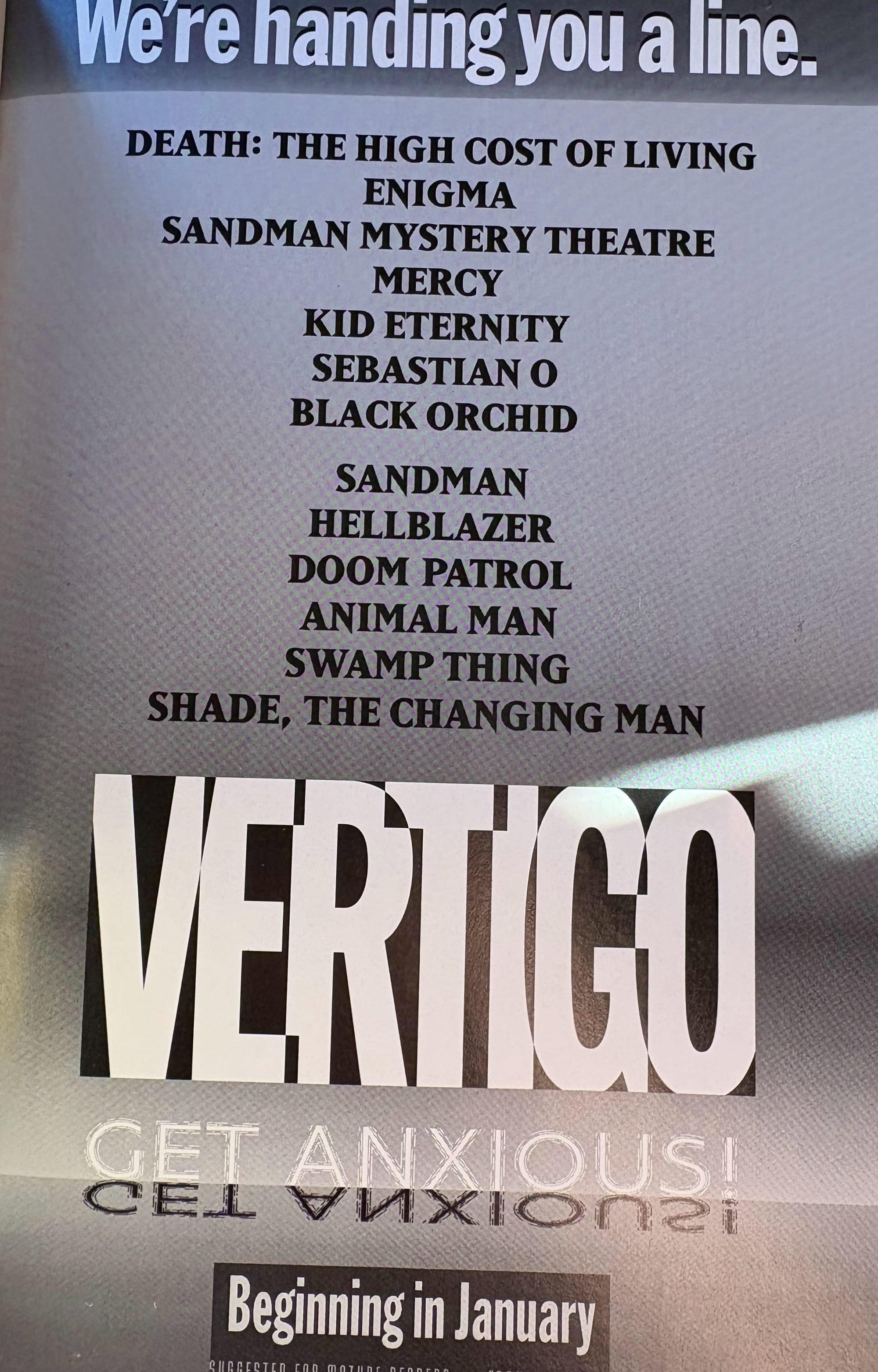
When I went over to the comic shop the other day to pick up Bleeding Hearts #1, the first issue in the newly-relaunched Vertigo line by DC Comics, I came across a copy of the 1992 Vertigo Preview in the dollar bins. The house ad above appears on the inside back cover of the issue. Launching Vertigo with "We're handing you a line" is one way to get the attention of a particular demographic, though I'm not quite sure they'd all pass the "mature readers" smell test.
I started reading Vertigo books a bit later in its existence, picking up the last few issues in the flagship Swamp Thing book just before it wrapped up in 1996. But I did stick around for Preacher and The Invisibles, mainly, along with whatever random books the candy store that sold comics in my neighborhood had each Wednesday (2020 Visions, House of Secrets, among others). I wasn't exactly heartbroken when Vertigo went away, but it did seem like a sign that DC was pivoting away from genres, aesthetics, and storytelling that veered sharply away from its core superhero line. I did enjoy the brief Young Animal imprint, which seemed like an attempt to take the weird vibes that previously escaped containment and land them back in the DC Universe.
Black Label has dabbled in Vertigo antics, most pointedly via the "Sandman Universe" series of tie-ins and continuations. I found those books to be mostly diminishing returns, noble attempts to recapture the old Vertigo lightning in a bottle that felt more like cosplay than some kind of bold new line. But Vertigo itself also had tendencies to cannibalize itself in its later years while it searched for its next breakout book. And some of the retreads that Black Label offered up beyond its Sandman revival efforts could be fun, perhaps due in part to the presence of some old Vertigo hands: Jeff Lemire and Doug Mahnke's apocalyptic monster mash take on Swamp Thing in Green Hell; Tom Taylor and Darick Robertson's grimy B-movie riff on John Constantine in Hellblazer: Rise and Fall.
Then there was The Nice House On The Lake. Here was a book that slid neatly into the lane that those late-era Vertigo books frequently trafficked in. The Nice House On The Lake is not my particular jam, though I have enjoyed a number of books written by James Tynion IV (his Batman run, The Department of Truth, and his work for Skybound's Universal Monsters line, among others). And I can see why its continued success might have motivated a full-on Vertigo relaunch. If A24 can repackage horror as something more mature for Letterboxd users, why shouldn't DC revive a line that did something very similar for comics in the 1990s?
So how do the new books fare so far? Below you'll find one jabroni's opinion.
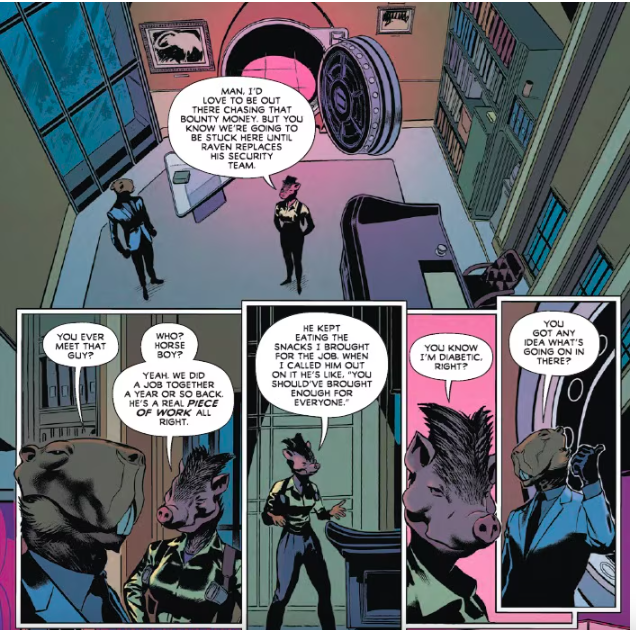
The best book of the trio I've read so far is End of Life, by Kyle Starks, Steve Pugh, Chris O'Halloran, and Becca Carey (with a cover by Gerald Parel). While the prominence of guns and hitmen might call to mind something like 100 Bullets at first glance, End of Life is a character-driven action comedy that is more reminiscent of Starks' previous work on books like Assassin Nation and Where Monsters Lie. Pugh, who worked previously with Starks on the Black Label Peacemaker miniseries that riffed on the vibes of the James Gunn HBO show, is an ideal companion to this brand of criminal hijinx, eschewing any desire to make these characters look cool in favor of selling each punchline by the panel and page. This issue is pretty exposition-heavy and the book still seems to be trying out its protagonist and his supporting cast as it finds its way. But I really like the absurdity at the core of this book and the idea of a nepo baby hitman who isn't properly reverential about his father's death-dealing institution and its attendant policies and paperwork (or its animal masks). End of Life is not what I was expecting from Vertigo 2.0 but I will take a good time over a bout of anxiety.
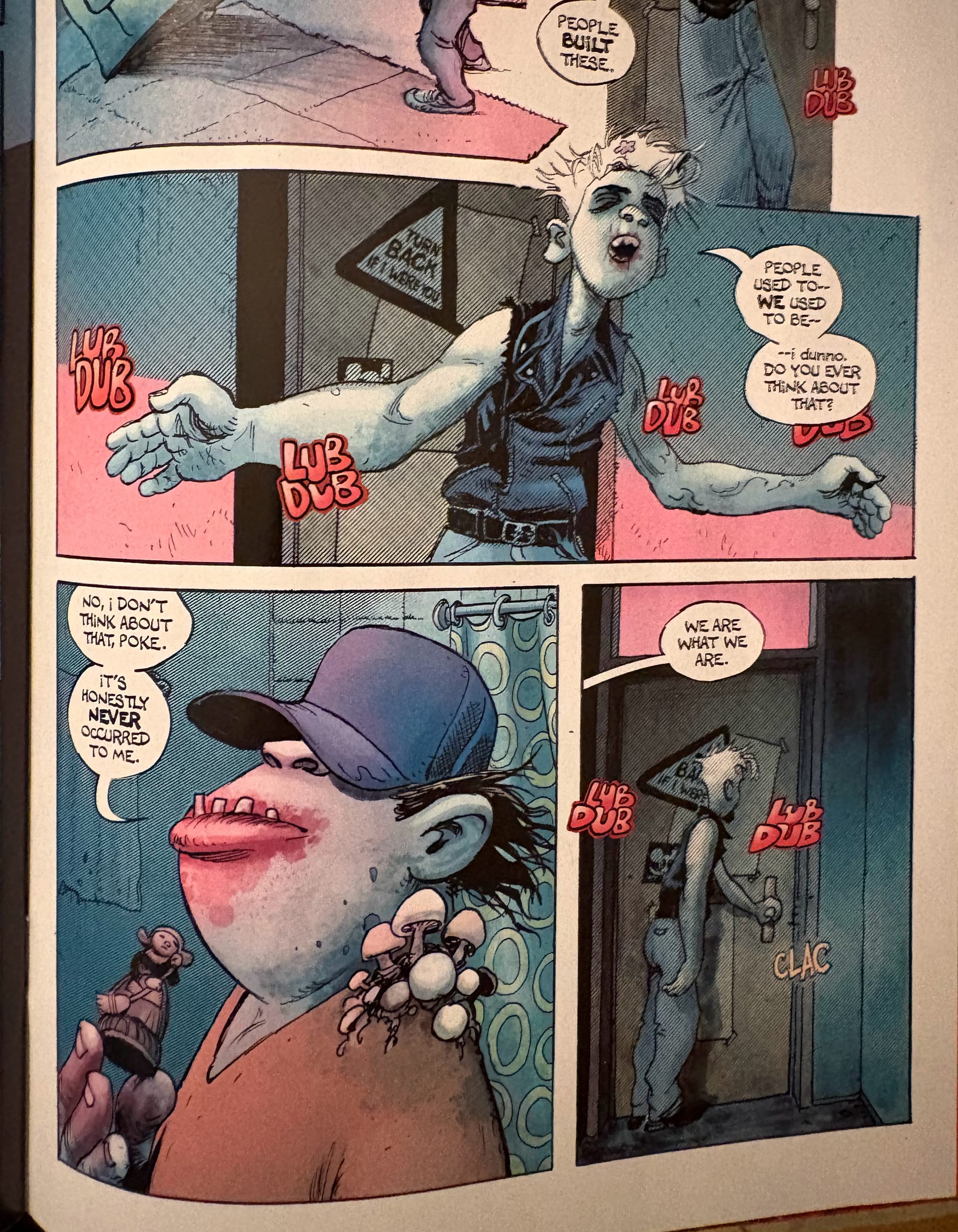
At first I thought Bleeding Hearts was an odd choice to kick off Vertigo 2.0, until I realized that the book could be marketed as "The Walking Dead but from the perspective of the zombies." That's not really what unfolds in the first issue, thankfully. Writer Deniz Camp and artists Stipan Morian, Matt Hollingsworth, and Hassan Otsmane-Elhaou serve up something that feels like a horror comedy like Idle Hands or My Boyfriend's Back in terms of tone, presented with an aesthetic that is more reminiscent of Jamie Hewlett than Charlie Adlard. Otsmane-Elhaou's lettering decorates the pages with cartoonish sound effects and exclamations that frequently stretch or even break the boundaries of word balloons. I enjoyed Morian's character design, especially on supporting character Mush, who has small clusters of mushrooms growing on each shoulder and the general disposition of an unemployed orc. At points he reminds me of Sam Keith's work, a point of comparison aided by Hollingsworth's creative uses of colors like green and white to accentuate Morian's lumpy and misshapen figures as they scavenge the suburbs. I'm not particularly hooked by the story though, which seems to be lumbering across well-worn zombie terrain. Mush's justification of his zombie tendencies as "We are what we are" feels a bit too close to "We are the Walking Dead...again!" So I'll probably keep tabs on this one in the DC Universe Infinite app to see if things get a bit more interesting.
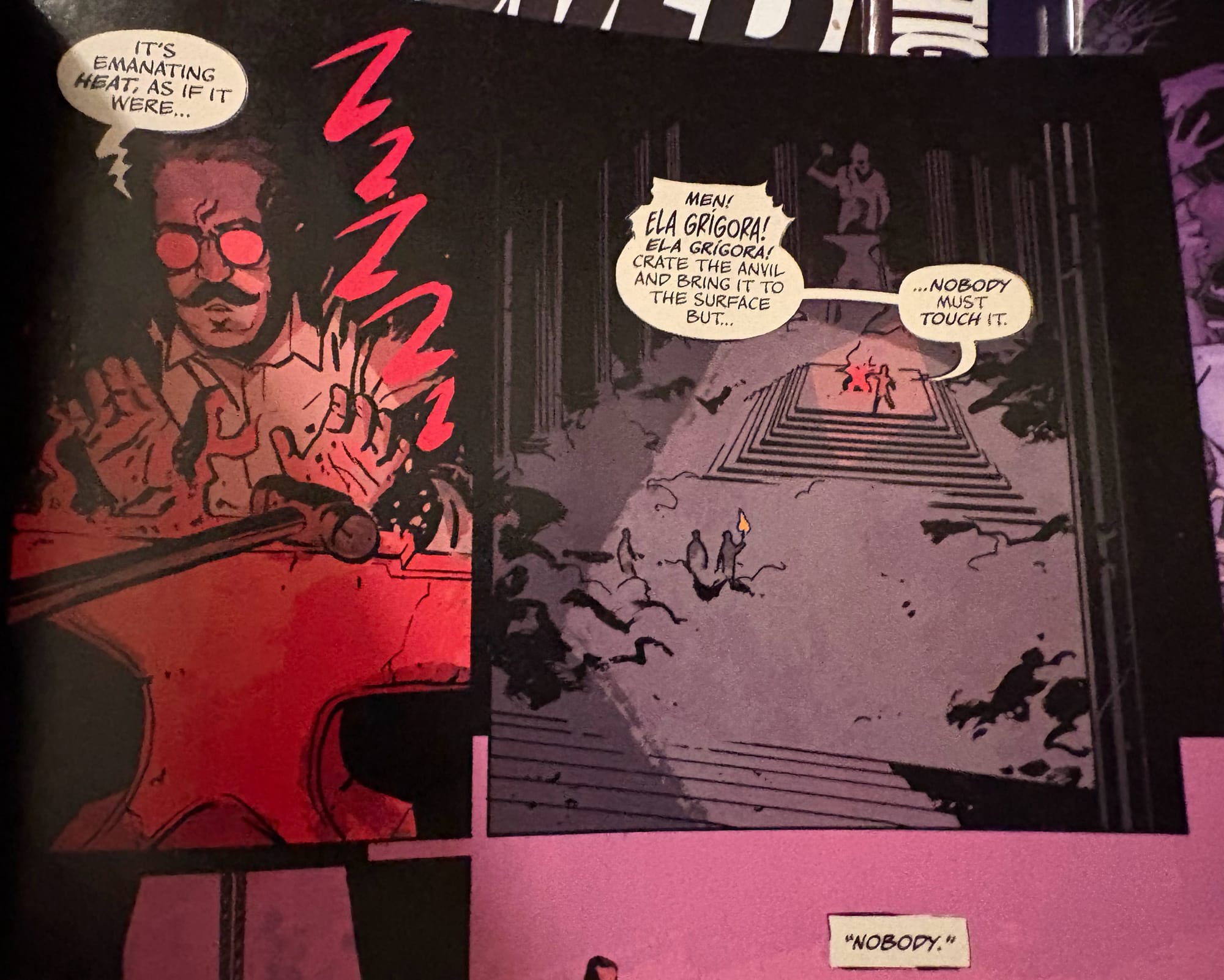
The Peril of The Brutal Dark: An Ezra Cain Mystery introduces us to an anthropology student who went off to World War I and rejoined civilian life as a private detective in New York. As a fan of Rennie Airth's John Madden novels (especially River of Darkness), I was optimistic about this one. But the first issue, by Chris Condon, Jacob Phillips, and Otsmane-Elhaou, felt too much like prologue than the presentation of a compelling protagonist and mystery. The coloring expertise of Phillips is front-and-center in the book's opening segment at a dig site in Greece, but the city sequences that follow are less compelling. There's a kind of visual monotony that blurs the streets, offices, and even meatier settings like The Museum of Natural History, though it's not clear if Condon's script gave Phillips much room to maneuver. Otsmane-Elhaou's lettering approach, which worked pretty well in Bleeding Hearts, feels more distracting here, with the sounds of machine guns, cars, and telephones more at odds with the desired period piece aesthetic that Phillips seems to aspire to in his approach. Ezra Cain isn't given much time to shine in his own book and at this stage feels more like a cipher than a compelling lead. And the "brutal dark" we are introduced to in the book's title doesn't materialize until the last line on the last page.
Your mileage may vary, of course. All three of these books look great beyond their choice of artists and align with the generally high quality of DC's current design and production values. I know some folks have quibbled with the decision to shift the iconic Vertigo logo from horizontal to vertical but I will leave that conversation to my passionate graphic design pals.