Beyond Big-Budget Wrestling
It's an odd time to start a blog about stuff that most people view as Trash, given everything else currently going on in the world. But I have missed blogs as a space that is distinct from social media, and like a lot of folks I am looking for an outlet that isn't in competition with or in conversation with whatever new stream of horrors materializes on those feeds. We'll see how this goes.
The title of this blog, SwimmingH In Trash, comes from a condescending line that one of my old roommates used to break out whenever they'd find me engaged with some kind of cultural object they found inferior to the mass-market literary fiction, pseudoacademic monologuing, and political proselytizing they preferred to consume. "You love swimming in trash" was a frequent refrain in our conversations. A lot of what you'll see discussed here is viewed by folks elsewhere as Trash: professional wrestling, horror movies, superhero comic books (among other things). The H in the first word of the title is there to steer folks towards a particular acronym when discussing this site. An extra layer of Trash for the Trash Pile I plan to build over here. Let's get trashy.
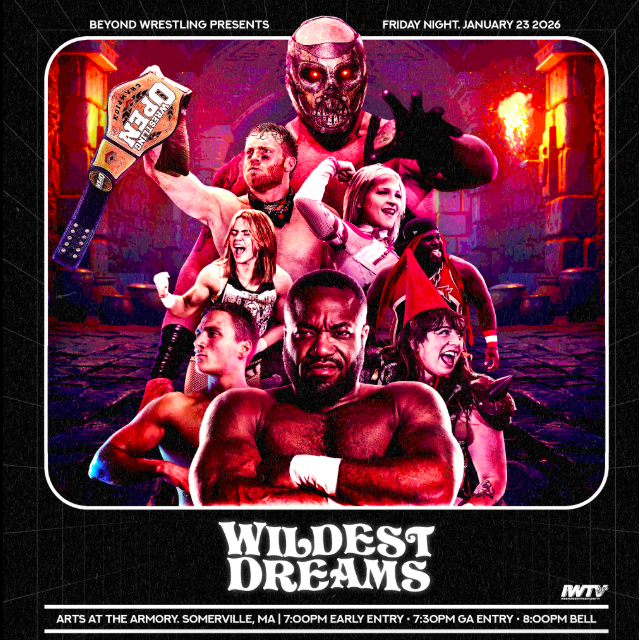
It's a frigid Friday evening in January, and I have left my house in Boston to head to neighboring Somerville for an evening of professional wrestling. The show, put on by New England's Beyond Wrestling, is called "Wildest Dreams." In addition to regional indie wrestling regulars like the silent giant Krule, "Gnomie" Gabby Forza, "Fancy" Ryan Clancy, and Bobby Orlando (and his goat), the card also features former Ring of Honor champion Jonathan Gresham and current WWE ID signee Aaron Rourke. They all do battle in a historic armory that has been refurbished to host arts and cultural programming; the Beyond setup there resembles something like an upscale VFW hall, though the higher ceilings favor the wrestlers and some balcony seating would later assist a wild spot during the night's four-way tag team match. A raffle for a bong is run by one of the dispensaries sponsoring the show (I did not win the bong). During a mid-show break and after the night's festivities, many of the wrestlers staff folding tables where attendees can buy merch or snap pictures. Forza has set up a mushroom-shaped tent, where she surrounds herself with a collection of miniature (and regular gnome-sized) statues. A giant black curtain separates the crowd from a makeshift dressing room for the performers, though some frequently pop out to use the restrooms, chat with friends, and watch the work of their colleagues.
Like a lot of American boys growing up in the 1980s, I watched a lot of WWF wrestling. The company had staged a full-court press on kids my age between its Saturday afternoon Superstars show, pay-per-view extravaganzas, cartoons, video games, action figures, and ice cream bars. I watched wrestling into early high school but eventually pursued other interests like comic books, post-Scream horror movies, and the Dave Matthews Band. I circled back a bit to WWF during college, mainly to watch Monday Night Raw and the nascent Attitude Era's wild characters and promo segments. Then I dropped off completely for about a decade, only returning to the fold because one of my brothers moved to Boston and was still a fan. Since then wrestling has become one of my core interests, to the extent that I watch AEW regularly, check in when I can with New Japan Pro Wrestling, keep tabs on the wider landscape with a small group of friends and fans in a Discord server (that I pay for), read books and old wrestling magazines when I come across them at consignment shops and comic book stores.
I never attended a live professional wrestling show as a kid; I think the closest I came to that was considering a trip to the USS Intrepid to watch "All-American" Lex Lugar bodyslam Yokozuna on the ship in 1994. But when I got back into wrestling as an adult, attending a live show was inevitable. WWE continues their aggressive marketing tactics, only now they are aimed more at older folks like me with the disposable income to attend their increasingly-expensive spectacles and "experiences." The first time I attended a WWE show, a live taping of either Monday Night Raw or Smackdown, the pyrotechnics, massive sound, and overall high production values were almost overwhelming, to such an extent that when I went to my first WWE "house show" I was initially too distracted by the absence of those elements to enjoy myself.
Indie shows are a different beast, and they can be a good way to gauge what it is you enjoy about wrestling. They can also open you up to different ideas of what wrestling can be. As I have become curious about different promotions and styles of wrestling over the last decade or so, I've learned the joys of de-centering the WWE presentation style. That style does still appeal to me. For example, at John Cena's final Monday Night Raw in Boston this past fall, which I attended live at TD Garden, Cena and Dominik Mysterio delivered a concise version of what WWE can do well if it gets out of its own way and trusts their talent to deliver the action figures they frequently asphyxiate in their shiny plastic packaging. But I also have come to love the aesthetics of New Japan Pro Wrestling, the high-flying showmanship of CMLL, the hybridity of all wrestling styles delivered increasingly well by AEW. It took time to adjust my expectations and familiarize myself with the fact that there are a wide range of styles across companies, that performers are often adept at shifting approaches depending on their opponent and context, that wrestling can be more compelling when it doesn't just aspire to all-caps superheroics and power chords.
"Wildest Dreams" was a nice showcase of some of the strengths of the current indie wrestling scene. While Beyond doesn't pretend that it is at the same level as AEW or WWE, it's also not a half-assed production. The talent that night included some up-and-coming regional players and well-seasoned road warriors. There was a clear trajectory from undercard to mid-show break (when many wrestlers sold merch and posed for pictures with fans) to main event. The show was streamed live and archived for IWTV , adding some stakes to the evening's proceedings given the opportunity to entertain online fans now and down the road and to create moments to share with a hyper-attentive and extremely loud (arguably to a fault on both counts) wrestling fandom that often feels superglued to social media. Show MC Rich Palladino steered things with his usual professionalism and aplomb.
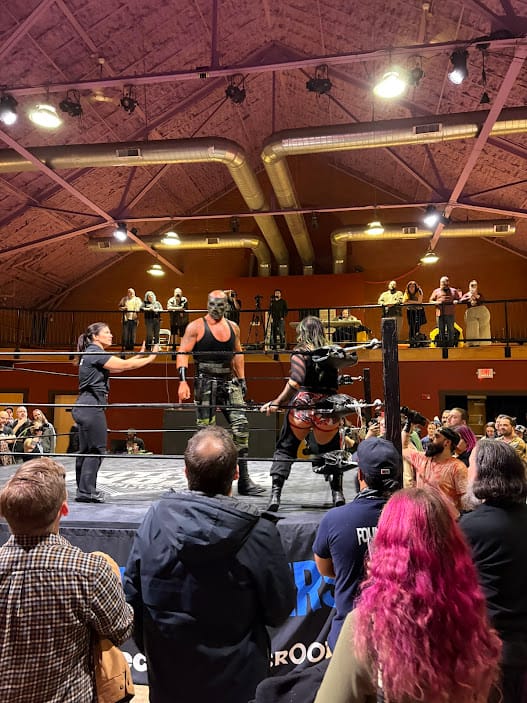
My favorite match of the night was the main event between Gabby Forza and Krule. Krule is a throwback to the strong, silent big man, a masked giant who feels less like Kane or The Undertaker and more like someone the wrestlers playing those parts might become for a low-budget horror movie payday. He doesn't have the stage presence of an Undertaker, but he also doesn't have the luxury of top-tier smoke and mirrors paid for by a major company. But he works particularly well in this kind of booking, paired with a much smaller challenger. Forza fought like she had something to prove, trading in her more colorful costume palette for a black ensemble. Weapons were unsheathed and tables were broken. It wasn't a carefully choreographed stunt showcase but it wasn't aspiring to be that. Its slow-motion car crash pacing worked really well and Forza did a nice job of struggling against what felt like an inevitable loss. I left that match wanting to see more of both performers, which was a win for Krule especially, since I had been a bit underwhelmed by some of his more evenly-matched performances prior to this evening. Krule, like most indie wrestlers, is also likely getting better by spending more time in the ring. Forza has a lot of potential, nailing the part called for here but also clearly demonstrating that she can do more than play the well-trod underdog role.
Some things didn't quite click but still had potential. I had high hopes for the showdown between Jonathan Gresham and "Fancy" Ryan Clancy given the different shades of wrestler on display (Gresham's mastery of in-ring fundamentals and work ethic set against Clancy's condescending cockiness and purple velvet trunks) but the "Mountevans Rules" stipulation felt a bit poorly-presented (perhaps due to its late timing on the card and the lack of, say, a quick visual breaking down the core points) and came off as more convoluted that it seems to be. Both wrestlers were compelling but the format seemed to work more against their strengths than in favor of them. The show also had frequent post-match beatdowns delivered by the massive Oxx Adams, who seemed to be booked as running rampant across the card but felt more like a forced build than a fun tease of big things to come.
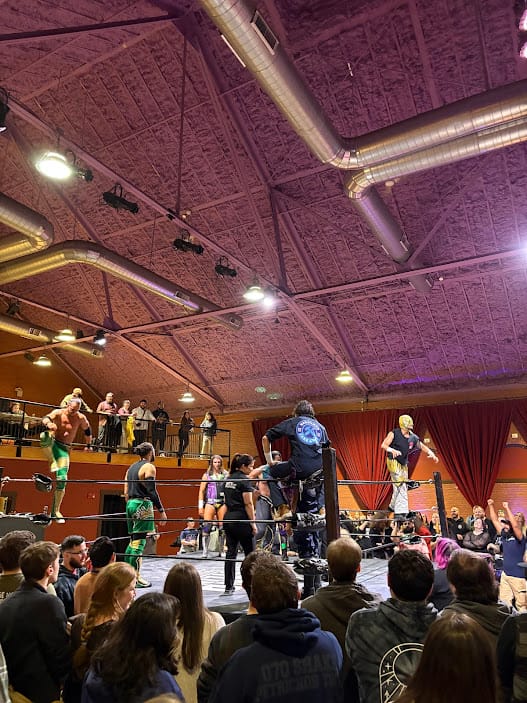
I was initially a bit underwhelmed by this card when I first saw it advertised, but the rest of the evening did a nice job of highlighting a wide range of wrestlers who bring different things to the table. I increasingly see the appeal of local favorites like Bobby Orlando and Love Doug, who bring a particular kind of New England dirtbag charm to their matches. Up-and-comer Liviyah showed a lot of promise as an emerging babyface (a tougher task to pull off these days). And Aaron Rourke demonstrated why he has that WWE ID affiliation in one of the night's most polished matches against a very game and vocal Kylie Alexa.
I was about to talk about what might appeal about this particular show to more casual wrestling fans, but I don't really think a "casual" indie wrestling fan exists in our current climate. There is certainly a dedicated and loud crew of Beyond regulars that are keeping this regional company in business. I have driven out to the White Eagle in Worcester a few times to attend their shows. I wouldn't say that the vibes are "welcoming" but this is New England, after all. My friend described the scene at the Armory that Friday as one where "intrusive thoughts were flying freely through the air," a comment on what passes for the comedic impulses and commentary sensibilities of the chattier audience members. I don't necessarily view these conditions as a problem to be fixed but it can be a bummer when people start competing with the performers or loudly expressing their displeasure in ways that seem designed to undermine the card. Wrestling fandom is a bit of a can of worms in its current in-person and online incarnations due to the passions (or fixations) of particular folks, though I think the structures and desires of social media networks and their architects also reward consensus and complaint in ways that can make lives miserable for performers and fans alike. I will say that, aside from a few jabronis and high-volume repeat offenders, the Somerville crowd was engaged and lively in ways that contributed positively to the show.
As I increasingly go to live wrestling shows, I think what particularly draws me to them is the character work inside and outside of the ring. Athletic skills, stamina, and move sets are integral to that storytelling in increasingly obvious ways to me. There can be tendencies to reduce performers to being "good promos" or "spot specialists" or even "good hands," but an indie show gives you a glimpse of how folks put various components together to see what works. And the live and improvised dimensions of wrestling feel more compelling when you're watching the action unfold in the venue.
Sometimes you wonder if the audience reaction from a particular spot is worth the risk or the expectations that a particular performer will continue on that same trajectory. At other times a wild sequence or set piece can make perfect sense and clarify the stakes of a match or a character in that particular time and place. It's particularly impressive to see wrestlers who seem to be comfortable instigating and reacting in ways that might complicate their performances. Gabby Forza, for instance, certainly seemed to be getting out of her comfort zone in compelling ways that night. And while smaller shows might prepare a wrestler for the bigger spotlight in the way a comedian on the road is honing their jokes before they encounter a larger audience, wrestlers don't seem to be refining individual acts or routines in the same way. In fact, some wrestlers who achieve a degree of recognizability can sometimes feel like they are going through the motions on indie shows or in the major leagues. WWE's current in-ring aesthetics have lost their appeal to me a lot in part because they feel too choreographed and constrained, resulting in high-risk maneuvers and clear demonstrations of athletic prowess seeming more familiar than fantastic. An indie show may be rough around the edges, but the capacity to surprise, to pursue things that materialize in the moment further, and even to get a bit self-indulgent and weird and can result in more compelling wrestling, for me at least.
All (terrible) photos from the show were taken by me. Indie wrestling has a great pool of photographers documenting the in-ring action in more compelling ways; Jon Washer has a great gallery of shots from the "Wildest Dreams" show.